Die Tango Connects Berlin Conference 2025 im Nou Mitte hat gezeigt, dass Tango weit mehr ist als ein Tanz. Jetzt sind alle Vorträge online kostenfrei verfügbar, und laden dazu ein, Tango in einem neuen Licht, jenseits der Tanzfläche, zu entdecken. Unsere
In dieser kleinen informellen Umfrage werden die verschiedenen individuellen Perspektiven des „Milonga-Raums“ beleuchtet. Da nicht alle der Befragten Deutsch sprechen werden die Fragen auf englisch gestellt. Jens and I share a long tango history – and love for neo tango music – he became a regular DJ at Nou Charlottenburg
In dieser kleinen informellen Umfrage werden die verschiedenen individuellen Perspektiven des „Milonga-Raums“ beleuchtet. Da nicht alle der Befragten Deutsch sprechen werden die Fragen auf englisch gestellt. #07 NOELIA TOMASSI (Berlin) 1. Why do you go to a Milonga? To meet friends and potential friends, to sing, to dance,
In dieser kleinen informellen Umfrage werden die verschiedenen individuellen Perspektiven des „Milonga-Raums“ beleuchtet. Da nicht alle der Befragten Deutsch sprechen werden die Fragen auf englisch gestellt. #06 VAN HAI NGUYEN (Vietnam) 1. Why do you go to a Milonga? If you had asked me this question back in
In dieser kleinen informellen Umfrage werden die verschiedenen individuellen Perspektiven des „Milonga-Raums“ beleuchtet. Da nicht alle der Befragten Deutsch sprechen werden die Fragen auf englisch gestellt. #05 SHARNA FABIANO (Los Angeles) 1. Why do you go to a Milonga? To enjoy the company of friends (and sometimes strangers!)
18/Feb
Nanou
Tango Connects Berlin Conference 2025 Videos sind online
Mittwoch, 24. September 2025
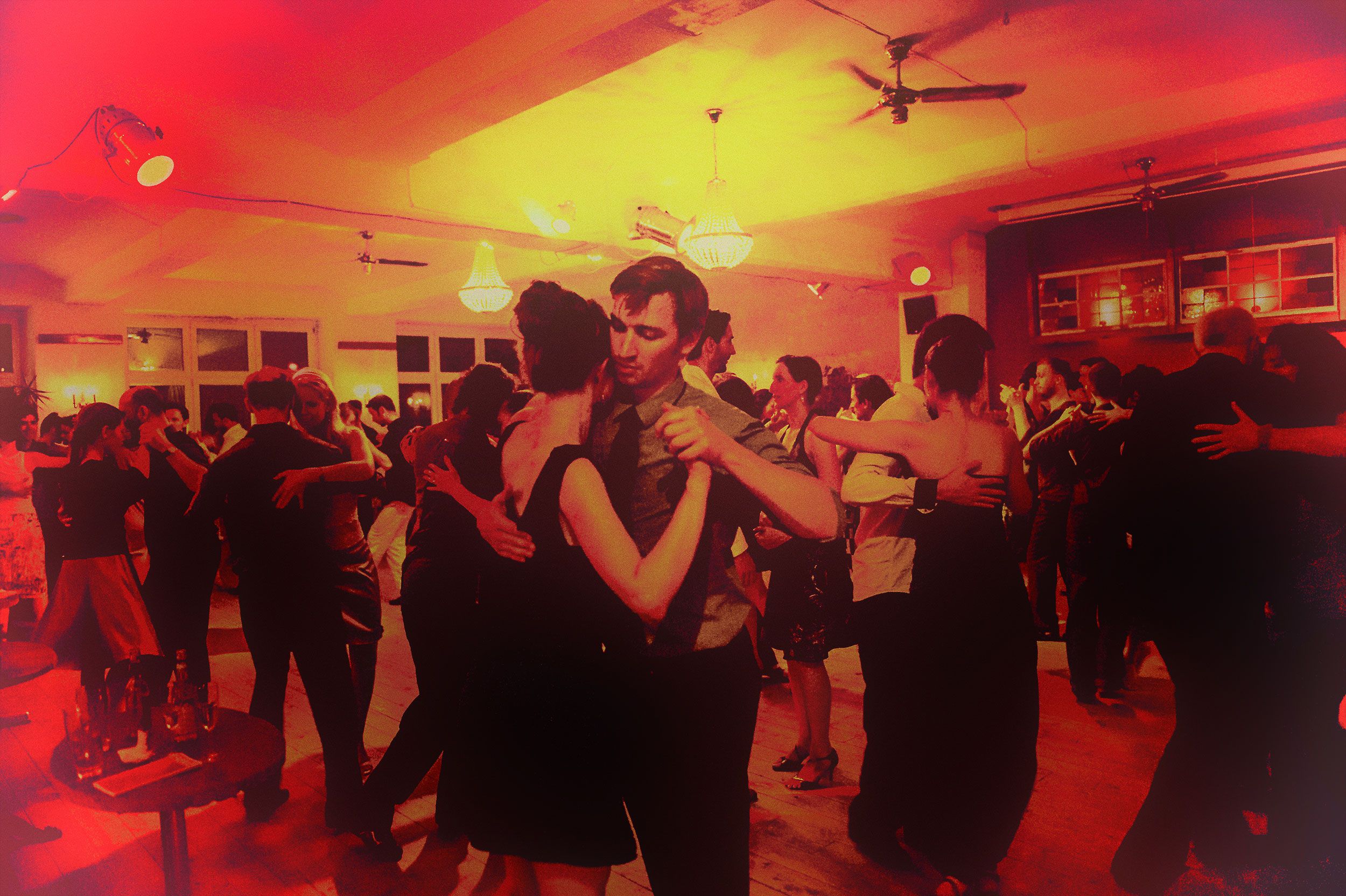
Die Tango Connects Berlin Conference 2025 im Nou Mitte hat gezeigt, dass Tango weit mehr ist als ein Tanz. Jetzt sind alle Vorträge online kostenfrei verfügbar, und laden dazu ein, Tango in einem neuen Licht, jenseits der Tanzfläche, zu entdecken.
Unsere Referent:innen haben den Tango aus den verschiedensten Perspektiven beleuchtet:
Neurowissenschaft: Wie wirkt sich menschliche Verbindung im Tango auf das Gehirn aus?
Soziologie: Welche Rolle spielt Tango für Gemeinschaften und soziale Strukturen?
Kunst & Kultur: Tango als Ausdrucksform, die Grenzen überwindet.
Community Building: Wie kann Tango Räume schaffen, die Zugehörigkeit und Inklusion fördern?
Von Heilung durch menschliche Nähe, über das Neudenken von Geschlechterrollen, bis hin zu Räumen für junge Menschen und der Vision eines kooperativen Tangoversums … die Talks zeigen, wie Tango nicht nur Individuen verändert, sondern auch ganze Gemeinschaften inspiriert.
Mit Tango Connects möchten wir Dialog anstoßen und Handeln inspirieren. Tango soll eine lebendige Praxis von Zugehörigkeit, Inklusion und kollektiver Resilienz werden, in Berlin und weltweit.
In dieser kleinen informellen Umfrage werden die verschiedenen individuellen Perspektiven des „Milonga-Raums“ beleuchtet. Da nicht alle der Befragten Deutsch sprechen werden die Fragen auf englisch gestellt.
Jens and I share a long tango history – and love for neo tango music – he became a regular DJ at Nou Charlottenburg in 2007, and while my DJ career faded he keeps spreading his tunes.
#08 JENS STULLER (Berlin)
1. Why do you go to a Milonga?
For having a nice dancing connection with a new or already known dancing partner.
2. In short, what are the three most important factors for a good Milonga?
Good and enough dancing partners, energetic music that I love, good dancefloor in a nice surrounding.
3. How do you define „good Milonga“?
If there is a nice flow on the dancefloor where everyone is integrated and partners are changed.
4. In short, what are the three things that you do not want to experience at a Milonga?
A dancing partner explaining me, what or how I have to lead, an elbow in my back and not respecting other couples space, not getting a connection to the dancing partner.
5. How do you choose who you dance with at a Milonga?
Very spontaneously. Eye contact and nodding or asking to dance after smalltalk. I’m often asked by followers and nearly never reject.
6. What are your thoughts on open role dancing at a Milonga?
I love open role dancing, because it leaves more room for creativity.
7. Do you have a most beautiful memory of a Milonga?
Yes, very long ago in old Tangoloft between 2 and 4pm, when there were only about ten couples left. I felt a wonderful connection with my dancing partner, the music and the other couples.
8. How do you see your role at a Milonga?
Having fun and spreading fun.
Jens dances Tango since 1996, both roles since 2011, and inspires dancers as a tango dj since 2005.
ONE-A-WEEK-SURVEY-2025-#07 – NOELIA TOMASSI
Dienstag, 4. März 2025
In dieser kleinen informellen Umfrage werden die verschiedenen individuellen Perspektiven des „Milonga-Raums“ beleuchtet. Da nicht alle der Befragten Deutsch sprechen werden die Fragen auf englisch gestellt.
#07 NOELIA TOMASSI (Berlin)
1. Why do you go to a Milonga?
To meet friends and potential friends, to sing, to dance, to experience my culture and share it with interesting people and feel less “far from home”.
2. In short, what are the three most important factors for a good Milonga? Open minded people in their best and/or authentic mood, good music -best if live- the possibility to buy something to snack.
3. How do you define „good Milonga“?
A good milonga is the one that you know beforehand you will have a nice evening.
4. In short, what are the three things that you do not want to experience at a Milonga?
Gossip, bad music, drunk/smelly/exhibitionist/acrobatic dancers.
5. How do you choose who you dance with at a Milonga? I generally accept cabeceos from nice looking (the ones that give the impression of being good people, I don’t care of physical except too tall) men or women who can lead. If I have a good experience, I repeat. I also look at the faces of the followers dancing with them. If they smile, I go for those leaders.
6. What are your thoughts on open role dancing at a Milonga?
Way to go. (As long as they move forward and not backwards in the ronda!)
7. Do you have a most beautiful memory of a Milonga?
Many of them… it’s difficult to choose. I love dancing to big live orchestras, mostly when friends are playing or conducting.
8. How do you see your role at a Milonga? I like to think I am a kind of tango preacher or ambassador apprentice, who’s dedicated to learn and teach at the same time, knowing she will never finish learning.
*) Who are you and what drives you? I’m a tango interpret and I feel driven by music and arts in general.
Where is your Tango Homebase? Berlin – Buenos Aires – Paris. In that order.
In dieser kleinen informellen Umfrage werden die verschiedenen individuellen Perspektiven des „Milonga-Raums“ beleuchtet. Da nicht alle der Befragten Deutsch sprechen werden die Fragen auf englisch gestellt.
#06 VAN HAI NGUYEN (Vietnam)
1. Why do you go to a Milonga?
If you had asked me this question back in my Berlin days, I would have said that I love the social aspect of a Milonga. But it’s also the hope—the hope that the next Milonga will bring back that magical feeling you once experienced while dancing.
Since moving to Da Nang, Vietnam, my motivation has changed. The Tango community here is small, and every single dancer who shows up makes a difference. More often than not, I have to push myself to go to a Milonga, just to help fill the room with one more dancer.
2. In short, what are the three most important factors for a good Milonga?
– a varied selection of music. I tend to prefer melodic Tangos
– friendly dancers—they don’t have to be great, just pleasant to dance with
– some snacks to nibble on between dances
3. How do you define „good Milonga“?
About ten years ago, I was lucky enough to attend a Milonga at Villa Kreuzberg. A DJ from Buenos Aires was playing. His music was different from what most DJs in Berlin played. But what truly stood out was the way he introduced each Tanda—it created such a festive atmosphere that swept me away.
I don’t necessarily have to dance well myself. Sometimes, it’s enough just to watch great dancers, to be inspired by them.
4. In short, what are the three things that you do not want to experience at a Milonga?
– dancers with bad manners
– music that just drifts along without energy
– physical altercations
5. How do you choose who you dance with at a Milonga? Being a technically good dancer isn’t the most important thing for me. What matters more is whether I find someone likable and whether she is genuinely curious to dance with me.
6. What are your thoughts on open role dancing at a Milonga?
I rarely dance as a follower, but when I do, it’s mainly to experience Tango from a different technical perspective and perhaps to become more aware of my own weaknesses as a leader.
7. Do you have a special memory of a Milonga that you want to share?
The “Kottbuser Tor Hit & Run Milonga” that you organized—this must have been twelve years ago. With an absolutely phenomenal live orchestra! I still rave about it, and I’ve told the story countless times here in Vietnam.
8. How do you see your role at a Milonga? To support the Tango community here in Da Nang, my hometown since five years.
*) Who are you and what drives you? In 2010, I moved to Berlin after quitting what I once thought was my dream job. It wasn’t the life I had envisioned for myself. Little did I know that Tango, which I discovered in Berlin, would have such a profoundly positive impact on my life.
ONE-A-WEEK-SURVEY-2025-#05 – SHARNA FABIANO
Dienstag, 18. Februar 2025
In dieser kleinen informellen Umfrage werden die verschiedenen individuellen Perspektiven des „Milonga-Raums“ beleuchtet. Da nicht alle der Befragten Deutsch sprechen werden die Fragen auf englisch gestellt.
#05 SHARNA FABIANO (Los Angeles)
1. Why do you go to a Milonga?
To enjoy the company of friends (and sometimes strangers!) through a connected and creative experience of dancing tango together, and also to chat and to watch others dance.
2. In short, what are the three most important factors for a good Milonga?
– a physical environment designed to feel both relaxing and magical – this can be the physical structure itself, the way the furniture, lighting and other temporary features are arranged, or some combination of the two.
– intentional and skillful musical selection
– the collective focus of those attending is leaning toward generous and open to connecting with others.
3. How do you define „good Milonga“?
Nowadays, afternoon milongas are my favorites! Beyond that, a good milonga is one in which the above three conditions synchronize to open a liminal space apart from everyday life. This allows me the opportunity to shed stress and worry and return to a more authentic state of being in a community setting. There are so few places where that is possible in our world and I think it’s one of the greatest gifts of social dance. It’s not the same to relax at home by yourself or with your family. That can also be healing IF your home is a nourishing place, but it doesn’t offer the same “refresh” of your system that the community setting does.
4. In short, what are the three things that you do not want to experience at a Milonga?
– Physical or psychological harassment, abuse, or manipulation
– Negative criticism of self or others
– Excessive heat – I don’t like sweaty social dancing, just a picky personal preference
5. How do you choose who you dance with at a Milonga? I dance so little nowadays that it is almost always a pre-arranged outing with a group of friends, and I dance mostly with those people. If an old tango friend or colleague I haven’t seen in many years appears unexpectedly, that’s a special thrill for me and I would prioritize dancing with that person. Beyond those cases, I look for partners who 1. have a minimum threshold of skill level such that I’m certain we will both be physically comfortable and 2. seem to have interest in me at the same time I have interest in them. If a stranger invites me and I feel a clear internal YES or internal NO, I try to follow that intuition either way.
6. What are your thoughts on open role dancing at a Milonga?
Yes, of course open role dancing. Dancing roles, like other roles, are not biologically determined – they’re socially determined. If we believe in social equality in life and work then I don’t see why we would not encourage social equality on the dance floor. I was incredibly lucky in that I learned both roles from the very beginning, and I’d like everyone to feel free to choose or change their role as they wish. I don’t like switching roles in the middle of a song, though. I like to dance the whole song in one role. That’s just my personal preference.
7. Do you have a most beautiful memory of a Milonga?
Instead of a memory I’ll share a vision: After many years of tango retirement, I’ve started teaching again and have found an incredible venue to partner with in my city. I imagine a new tango community evolving organically, and ultimately hosting a beautiful milonga there.
8. How do you see your role at a Milonga? I’ve played every formal role imaginable at a milonga, but right now I’m enjoying being anonymous, just a dancer. That said, I do feel I have a role to play in bringing a positive mindset and a positive somatic state of being into the space. I think everyone has that role and it’s easy to forget that you influence the environment even if you’re not an organizer or a teacher. In the words of Priya Parker, “guesting” is just as important as “hosting.”
*) Who are you and what drives you? I’m fascinated with improvisation in all art forms and in all relationships, and I believe lead and follow dynamics are at the heart of everything humans do, feel, and are. I am a tango artist and movement specialist with 25 years of teaching experience and a Master’s degree in Dance. I’m also a mindfulness-based coach, a painter, and a writer. I love trees, throw great dinner parties, and read fantasy novels.